Tuesday, May 09, 2006


Train 693: Rock-a-bye-James
 As soon as I open my eyes, I know that we are on the famous home straight, the long straight stretch of track that runs from north of Gillam (our last stop late last night) to Churchill. The track here is at it's most unstable: while the sleepers safely keep the rails evenly spaced, the variation in the thawing of the ground means that the train is lurching from side to side. Being in the upper bunk and lying lengthways along the side of the train, I'm feeling the movement a lot. It's not inducive to motion sickness, and it doesn't feel unsafe, but it can catch you unawares. I gingerly step down from the upper bunk, trying not to be thrown off the ladder when the train lurches to one side.
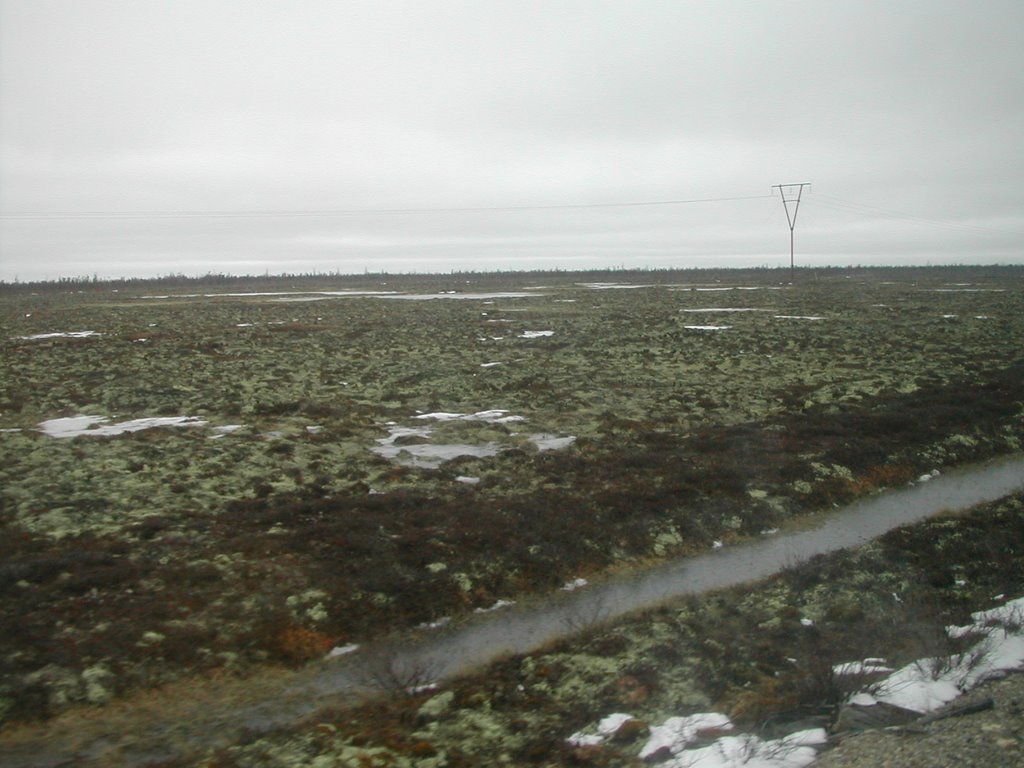
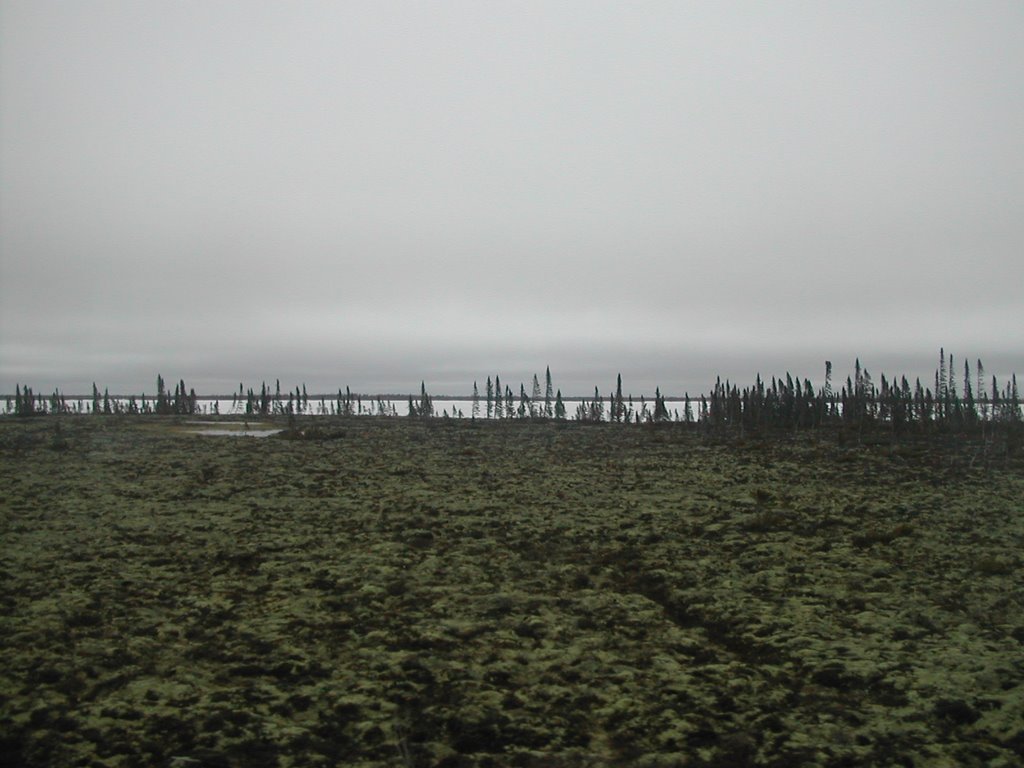
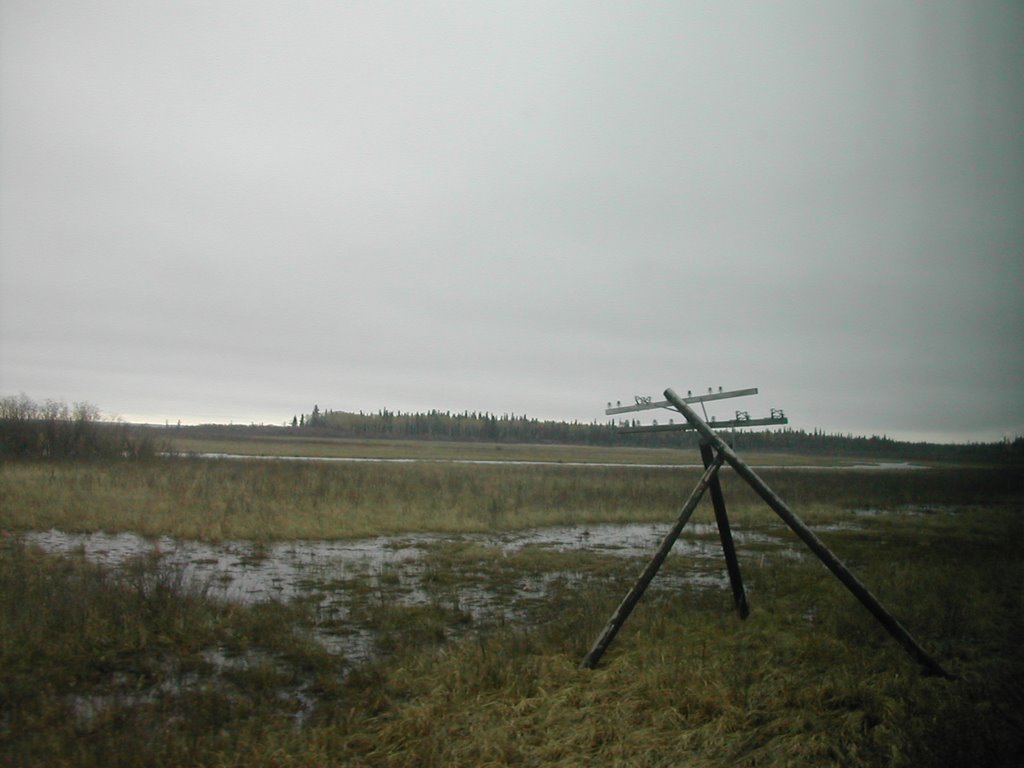
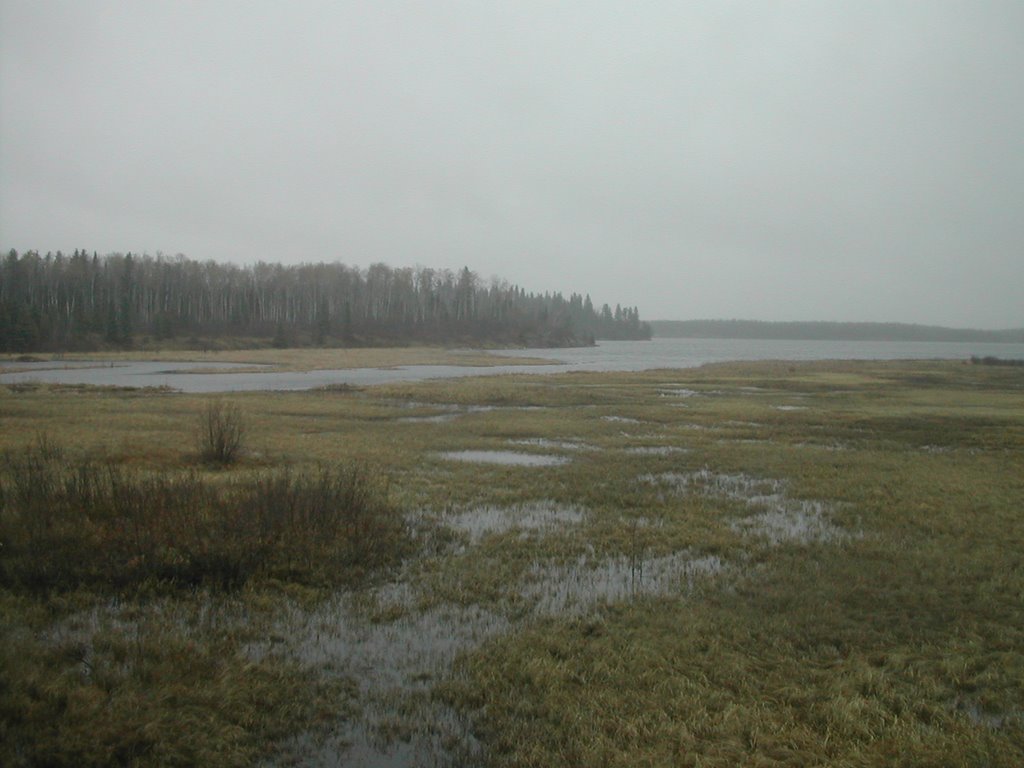
My first glimpse outside confirms that we are most definitely in Manitoba's far north. This is wilderness. Nothing but rough tundra and occasional stumpy looking trees, growing as if under twice the normal pressure of gravity. The sky is a bright grey, and there are patches of snow on the ground. Some still patches of water are frozen over. While the ground supports some very green moss, the pallette of colours outside my window is much more muted than down south. It's an earthy, cold scene. Other than the bright moss, the trees and bushes are dark dark green. However, for what must be such an inhospitable place, there is a remarkable variety of plant life here.
 To our left are tall steel electricity pylons. To our right are the much older wooden tripod telegraph poles. These were probably built soon after the railway opened in the late nineteen-twenties, and they no longer support any wires. They were built in a tripod form so that they could move up and down with the freezing and thawing ground. A normal wooden telegraph pole would soon fall over as the earth moved around it's base.

Train 693: Dinner
Since I'm going to be on this train and the return service for a total of nearly eighty hours, I've packed a fair quantity of food and snacks. However, I find it's all part of the experience to try and take at least one meal a day in the on-board restaurant car. I could quite easily get by on sandwiches, tinned sardines, fruit and other snacks, but over four nights that would get a bit boring.
There was no meal service leaving Winnipeg last night. Breakfast, lunch and dinner were served today, and breakfast will be served tomorrow before we arrive in Churchill. The same pattern works on the southbound return trip. The restaurant also acts a take out snack counter, and sandwiches or other over priced odds and ends can be bought for consumption at your seat. The tariff for the take out counter is published online here. You can read all of VIA Rail's restaurant car menus here.
I'd not taken lunch here, but I had promised the ever friendly Tara (my chef and sleeping car attendant) that I would be back for dinner. As we pulled away from Thompson I sat down to eat. Only three or four other passengers (all travelling the full distance from Winnipeg to Churchill) had taken a sit down meal, although many of the coach passengers were coming through to buy snacks or beer. The menu on the 'Hudson Bay' is much like the restaurant car itself: compared to the 'Canadian', it's pared down for more modest journey. But that also means it's much more reasonably priced. Since I wanted to stick to something appropriate for my trip, I chose the Grilled Arctic Char. The menu describes it as: "From the icy waters of the Canadian North, grilled with fresh garlic and seasonings and finished with fresh lemon." It costs C$11.50, and I had a beer (C$4.75) with it.
Char is much like salmon, only somewhat lighter. It was served with potatoes and green vegetables. Overall it was good; maybe not the most impressive sea food meal I've eaten, but then the fish would have had to have been frozen to brought this far. I was happy to pay this price for it, and I have lots of respect for anyone who can prepare a meal while bouncing along this notoriously rough track.
After dinner, I stayed in the restaurant car and chatted with the crew, including one of the Hudson Bay Railway employees who was working the train. We talked about my trip and my career, and then I asked him about how he found life up here. He lives in Gillam, about mid-way between Thompson and Churchill. It can, he admitted, "be very depressing" being so far from other towns and living in such a small community. He seemed to be considering returning south in the future, but as for his job, enjoyed working on board the trains. A good team of colleagues seemed to help.
I made my excuses, and head to bed. Before leaving I'm advised that one of the coach passengers has chosen to pay a 'night fare' and upgrade to the berth below mine for the ride up to Churchill. I'm slightly disappointed about having to share an entire sleeper carraige with another paying passenger, but then one can't travel in absolute luxury all the time... :-)
The track is too bumpy for a shower or a shave tonight, so I wash quickly, haul myself up into my bunk, and pull the curtains closed. Thinking of all the nights I've spent roughing it in coach class makes it easy to curl up beneath the thick duvet. I read a bit more of Johnny Fedora's exploits in Trieste. He seems to lack the intelligence, style and subtlety of James Bond, which leaves him particularly laughable. Still, he always has time for a drink and has amazing luck with the ladies. Some men get away with everything...
Good night.
There was no meal service leaving Winnipeg last night. Breakfast, lunch and dinner were served today, and breakfast will be served tomorrow before we arrive in Churchill. The same pattern works on the southbound return trip. The restaurant also acts a take out snack counter, and sandwiches or other over priced odds and ends can be bought for consumption at your seat. The tariff for the take out counter is published online here. You can read all of VIA Rail's restaurant car menus here.
I'd not taken lunch here, but I had promised the ever friendly Tara (my chef and sleeping car attendant) that I would be back for dinner. As we pulled away from Thompson I sat down to eat. Only three or four other passengers (all travelling the full distance from Winnipeg to Churchill) had taken a sit down meal, although many of the coach passengers were coming through to buy snacks or beer. The menu on the 'Hudson Bay' is much like the restaurant car itself: compared to the 'Canadian', it's pared down for more modest journey. But that also means it's much more reasonably priced. Since I wanted to stick to something appropriate for my trip, I chose the Grilled Arctic Char. The menu describes it as: "From the icy waters of the Canadian North, grilled with fresh garlic and seasonings and finished with fresh lemon." It costs C$11.50, and I had a beer (C$4.75) with it.
Char is much like salmon, only somewhat lighter. It was served with potatoes and green vegetables. Overall it was good; maybe not the most impressive sea food meal I've eaten, but then the fish would have had to have been frozen to brought this far. I was happy to pay this price for it, and I have lots of respect for anyone who can prepare a meal while bouncing along this notoriously rough track.
After dinner, I stayed in the restaurant car and chatted with the crew, including one of the Hudson Bay Railway employees who was working the train. We talked about my trip and my career, and then I asked him about how he found life up here. He lives in Gillam, about mid-way between Thompson and Churchill. It can, he admitted, "be very depressing" being so far from other towns and living in such a small community. He seemed to be considering returning south in the future, but as for his job, enjoyed working on board the trains. A good team of colleagues seemed to help.
I made my excuses, and head to bed. Before leaving I'm advised that one of the coach passengers has chosen to pay a 'night fare' and upgrade to the berth below mine for the ride up to Churchill. I'm slightly disappointed about having to share an entire sleeper carraige with another paying passenger, but then one can't travel in absolute luxury all the time... :-)
The track is too bumpy for a shower or a shave tonight, so I wash quickly, haul myself up into my bunk, and pull the curtains closed. Thinking of all the nights I've spent roughing it in coach class makes it easy to curl up beneath the thick duvet. I read a bit more of Johnny Fedora's exploits in Trieste. He seems to lack the intelligence, style and subtlety of James Bond, which leaves him particularly laughable. Still, he always has time for a drink and has amazing luck with the ladies. Some men get away with everything...
Good night.
Train 693: Leaving Thompson
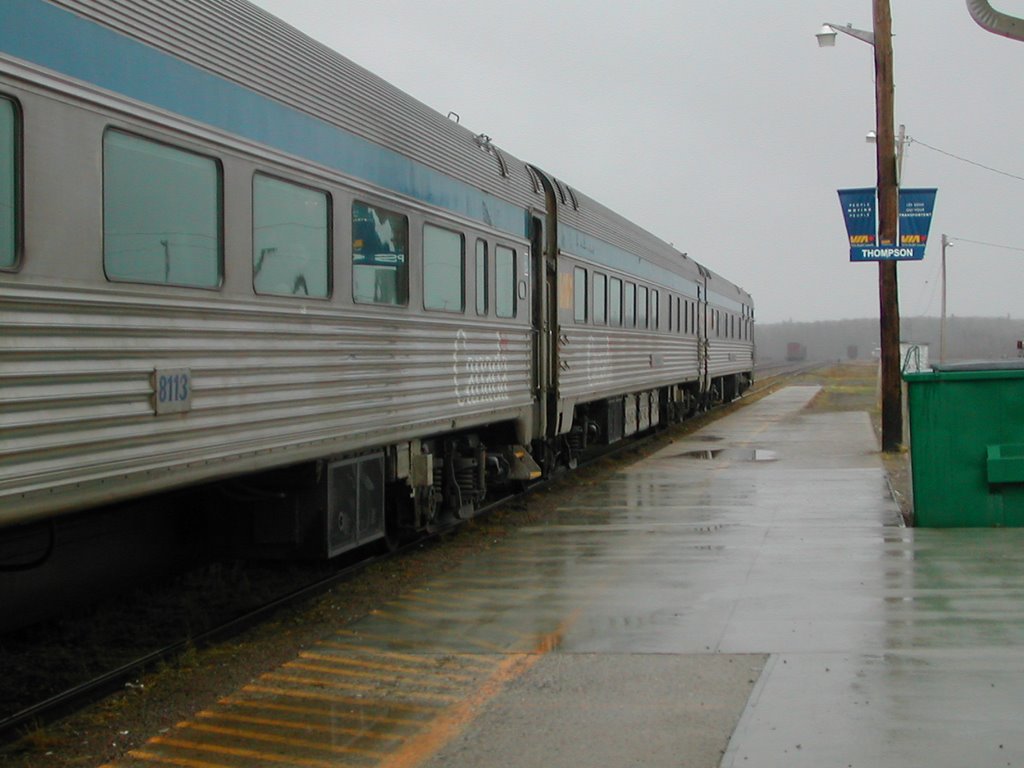 I take advantage of our extended stop in Thompson to step off the train. It's raining here, and even the hardened smokers are finding it hard to justify huddling outside for longer than their cigarettes last. There's also a slight chill in the air - perhaps a hint of what is to come? I walk up and down the platform to watch the activity that has started with the arrival of the train. A number of pick-up trucks are loading supplies onto the train, and a large crowd of people of virtually all ages is preparing to board the train. They are all going into the seated coaches, which soon fill up their comfortable limit, allowing every family a group of four seats and every individual a pair of seats on their own.
The train is fuelled and watered, and I hop back on board. Thompson is actually some way off the main line between The Pas and Churchill. We left it about an hour before getting to Thompson at the usefully named Thompson Junction. After the train is loaded and secured, we back out of the station and perform a slow reversing manouever over a triangle of tracks that turns us back towards the main line.
It's not just the passenger number that has grown. From this point on, the Hudson Bay Railway (over whose tracks we are running) insist on their own engineers piloting the train, and their own conductors managing the passengers and collecting tickets. I suspect that this would not be entirely necessary, but it saves VIA Rail having to base crew in Thompson, and also increases the number of local people who can benefit from this government subsidised source of employment.
We crawl over the turning tracks, and rumble on, back on the line towards Thompson Junction. We're now running about two hours behind, although this is hardly a complaint considering the circumstances in which this train runs. Exploring the two coach cars, I find people chatting, playing cards, sleeping or watching movies on portable DVD players. Up to now the train has been particularly quiet. That's because it's only the hardened rail fans or tourists who ride all the way from Winnipeg. If you live in Churchill and want to go to Winnipeg, it's faster to travel to Thompson by train, and then take the Greyhound bus to Winnipeg. It took us nearly twenty-three hours to travel from Winnipeg to Thomspon along an indirect route of almost 1,150km. By bus, the same trip by more direct roads takes just nine hours.
Train 693: Thompson

Our train "cools it's heels" at Thompson station.

Local businesses deliver large quantities of food and supplies for northern communities to the station, where they're loaded into the baggage car. Three trains a week all year round bring supplies to the villages and towns north of Thompson. Other than by plane, rail is the only way of reaching Churchill and communities north of Gillam.
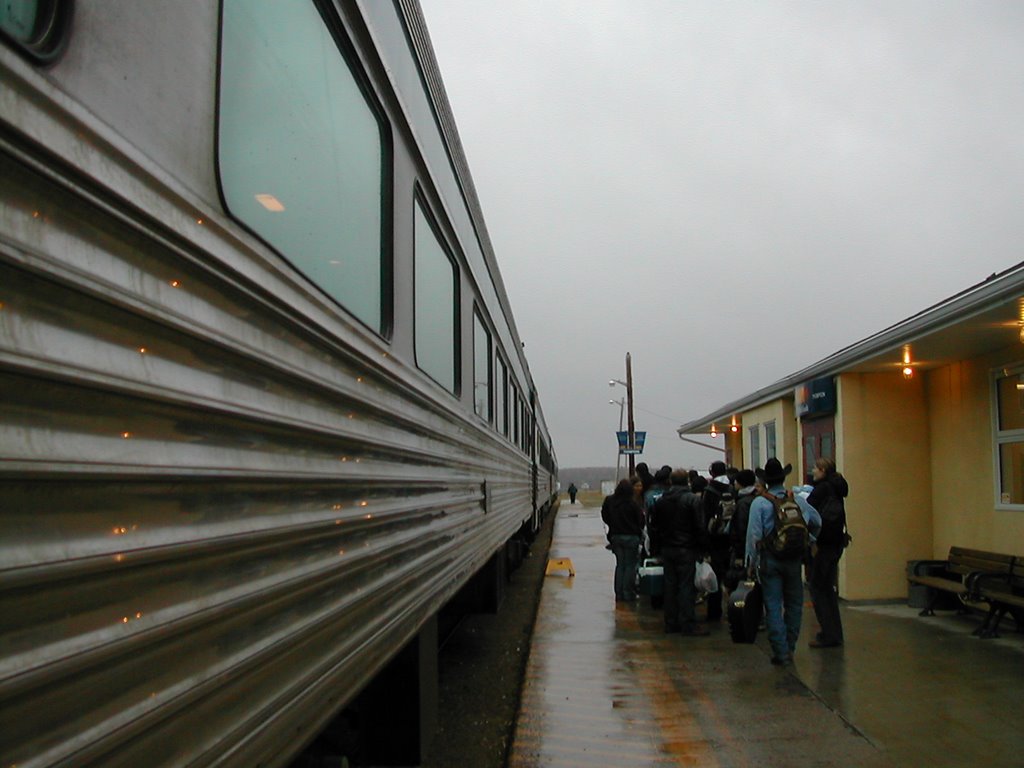
About twenty or thirty passengers board at Thompson, and the coach cars start to liven up.
Monday, May 08, 2006
Train 693: Thicket Portage
 We arrive at the small trackside village of Thicket Portage at about 17.30. I've begun to realise that I am hopeless at identifying trees and plants. I'm ashamed to admit that I even had an extensive 'field' education during my A-level general studies class, in which I studied some of England's woodland. Now I am reduced to bad poetry to try and describe the sometimes barren, sometimes straggly scenery of thin woods and empty lakes.
At Thicket Portage (which I still feel compelled to pronounce alternately in English and French accents... Thikkett Por-tayge or Thiquet Porrr-targe) a native Indian family of five gets on the train and starts playing a game of cards in the restaurant car. A cluster of pick up trucks and quad-bikes have gathered around the open doors of the freight car to collect supplies that have been carried up from The Pas.
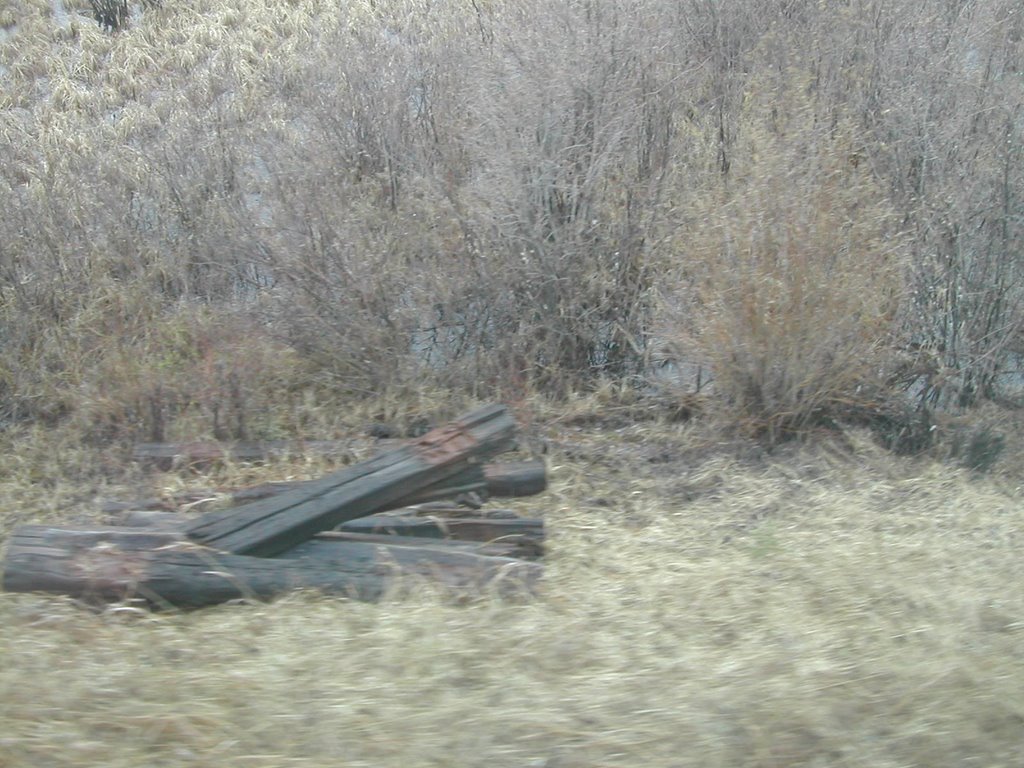
Once we leave the small community, the signs of human existence beyond our tracks disappear once more. From time to time I catch sight of old railways sleepers that have been removed and tossed to the sides of the track. Sometimes I glimpse rusting tin cans that might have carried oil or grease. More often than not I see collapsed telegraph poles, long since made obsolete, and now just sinking into the ground or rotting away.
Train 693: Sidings
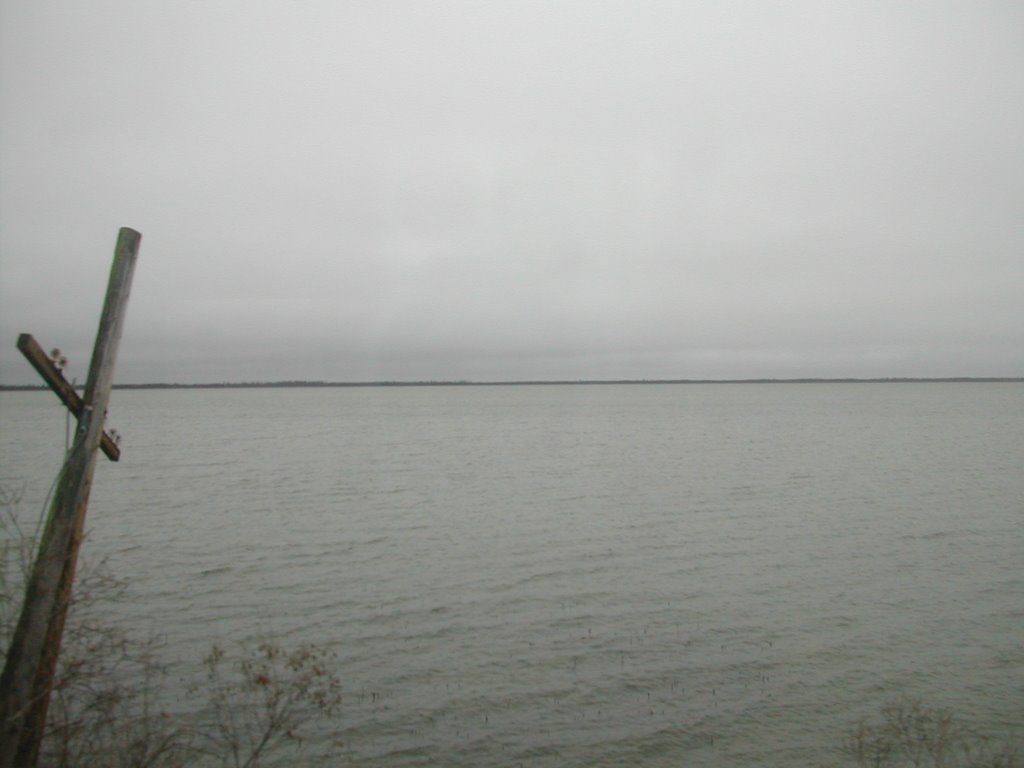 Just near to Wekusko, the train slows to a halt and reverses into a siding. While 95% of our route is along single track, occasional rusting sidings appear alongside us. Some times it appears that these are still used from time to time for the loading of lumber trains, and on a couple of occasions I notice large piles of felled trees stacked in adhoc clearings by the tracks for loading onto freight trains. I’m told later that most of the lumber felled up here is used for paper production.
We wait for a short while in the siding, and then a freight train rumbles past us, heading south. There is a mix of grain cars and empty lumber wagons behind two very shabby looking locomotives carrying the marque of the Hudson Bay Railway. The HBR was formed when the American company Omni-Trax bought the line from The Pas to Churchill for a nominal $1 from Canadian National. Omni-Trax also own the Port of Churchill, and have committed themselves to a very expensive programme of maintenance on this line. Starved of anything more than the essential investment for decades, the line is in need of millions of dollars of work just to keep it open. Omni-Trax is banking on being able to increase the amount of freight that passes through Churchill which, I’m told by a fellow passenger, never really operates above fifty percent of it’s capacity.
Once the freight train has passed, we return to the main line. All junctions up here are operated manually: the second engineer climbs down and pulls the lever right by the trackside. There’s no visual signalling either: I’m guessing that radio communication is used to dispatch the trains.
After the excitement of seeing another train, I curl up again and listen to my iPod. Before leaving Edmoton I made the mistake of replacing my selection of music (which I had begun to tire of after two weeks) with a random selection of my friend's collection. Big mistake. I have a strange compilation of Christmas tunes and Spice Girls karoake instrumentals. Luckily I also downloaded a few podcasts from BBC Radio (how I miss thee), so I've been contrasting the wilderness of northern Manitoba with indepth discussions and reports on the continuing trafficking of Eastern European women into the English sex industry; the thousands of unreported deaths in Darfur's civil war; and an assessment of the Labour party's disastrous results in the recent local English elections. I close my eyes, and imagine I am home again.
Train 693: 21 crew
 After we leave the Pas, I return to the sleeper car to read and to gaze out of the window. It’s hard to identify any clear change in the landscape that we are passing through. It is already less agricultural than the south of the province, but the forests come and go, and we frequently pass alongside lakes or streams: you don’t have long to wait until you see a body of water somewhere.
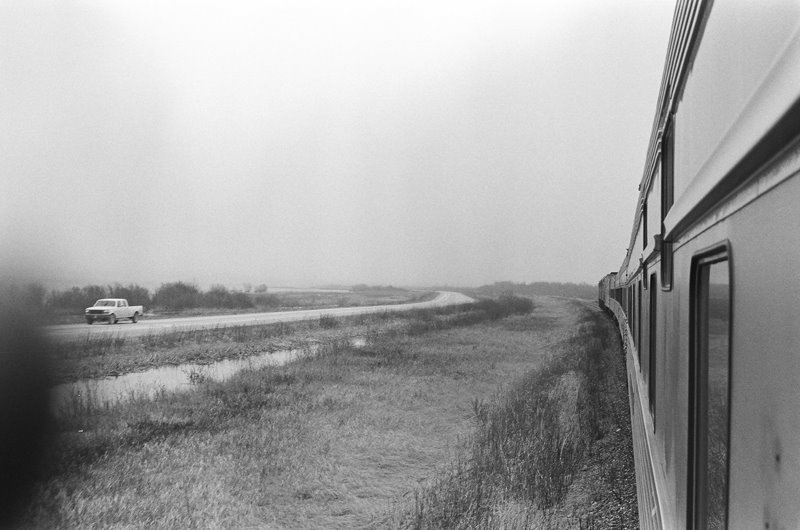
 At about 11.30 the service manager passes by. She offers very briefly to let me look out of the train from the vestibule at the end of our car. As we slow to a gentle crawl alongside the vast expanse of Cormorant Lake, I am able to lean out and take a photograph looking along the length of our train as it turns on a corner. Take note, however. She explains to me how frustrating it can be to deal with eager rail fans and tourists who let themselves out onto this open deck to take photographs. It’s not strictly permitted, and can get you and the crew into some trouble. So if you ever want to take a photo from back here, be sure to be on good terms with the crew first, and ask politely for them to acompany you back there when it’s safe and convenient for them. And don’t forget that a little gratuity at the end of a trip will always be appreciated by the on board crew.
 The service manager explains to me the crewing of the train. In addition to the three VIA staff on board the passenger cars, there are always two engineers up front. Both operate together, and change for a fresh crew at certain points along the way. Going north, the crew changes in Dauphin, Canora, The Pas, Thompson and Gillam. North of Thompson, the Hudson Bay Railway requires that the ticket collecting and train management be handled by two of their employees, so there are another four employees who work in pairs from Thompson to Gillam and Gillam to Churchill. By my calculations, and assuming that the same engineers who operate the train between two points going northbound get back on board to operate it on it’s return between those points, the ‘Hudson Bay’ employs 21 VIA Rail and Hudson Bay Railway employees. Impressive, when you consider that for much of our trip, the passenger count was in single figures.
 Signs of human life recede, and although I know that we are running nearly parallel to route 39 (running from north of The Pas to Thompson) it’s not often that it runs right alongside the track. We make a few stops along this stretch: Cormorant announces itself as we rattle over a level crossing and I look up to see a ubiquitous North American yellow school bus. We reach Wekusko at 13.55. At these stops maybe one or two coach passengers get on or off. At this time of year the true nature of the train is revealed. This heavily government-subsidised train offers a life line to the remote communities of northern Manitoba. Most are Indian communities, some in designated reserves. At some stops no passengers board or disembark, but food or other supplies that have been ordered by telephone are unloaded from the freight car at the front of the train.
Gradually I detect a change in the vegetation up here. The luscious arboreal forests have been replaced by bands of thin, leafless trees. Some areas were burnt out by forest fires, and you can begin to guess how long as elapsed since the burning by the size of the young saplings that are growing up from the forest floor.
I’m reading for much of this trip. I’m deep in the awful spy thriller paperback that I picked up in Denver (Johnny Fedora on assignment in Trieste). I escape his compulsively addictive adventures to catch sight of Hargrave Lake, which appears briefly to my right, a small blot on my map, but an immense volume of water that stretches to the horizon.
Train 693: James and the map
 If I haven't explained it enough already, don't be fooled into thinking that the 'Hudson Bay' is a scenic train. This is a long, slow, drag. The timetable suggests that it will last thirty-six hours, but I've already been told to expect a few more on that. The seasonal thawing of the ground and the track bed of our railway line has already started to slow our progress, and we are frequently travelling at about 40 km/h for long periods of time. You have to be an alternative traveller to appreciate this one, especially at this time of year, when Churchill's natural attractions aren't easy to observe.
I have plenty of reading material with me, and of course a good map. I've invested the princely sum of C$4.75 in Rand McNally's 1:1,250,000 scale provincial map of Manitoba. It costs the same as every other provincial map in the series, although they've had to use significantly less ink in this one than some other provinces. With the exception of the gentle curve that we made through a slice of Saskatchewan, our rail line is clearly marked for the whole of it's route. Using the standardised system of symbols, every community with a population of less than 1,000 is marked with a small white circle. Which means that many of the train's request stops along the railway line are marked as having a 'Population under 1000'. In many instances, however, these stops are hard enough to even notice. Named by the crews who built the line, many are just flag stops, marked by small yellow metal triangles on posts beside the track. Even at 40 km/h, if you blink you will miss them.
 Take a look at the 'Hudson Bay' train's timetable here to get a feel for some of the exotic names applied to isolated flag stops. Many have no immediate population near-by. Some might be used occasionally by native communities who live within 20 or 30km, but in most cases their only purpose would be for hikers or kayakers who want to access some of the remoter regions of the province. Even then, it's not exactly obligatory to get off at one of these flag stops: the 'Hudson Bay' is one of VIA Rail's services which will make a special stop to let you get off at any point along the train's route.
I dip in and out of my books, my newspapers and the map, tracking our slow progress towards Thompson, the last major town served by the train. We'll be making an extended stop there this evening to take on passengers and freight for subsequent halts and Churchill.
Train 693: The Pas
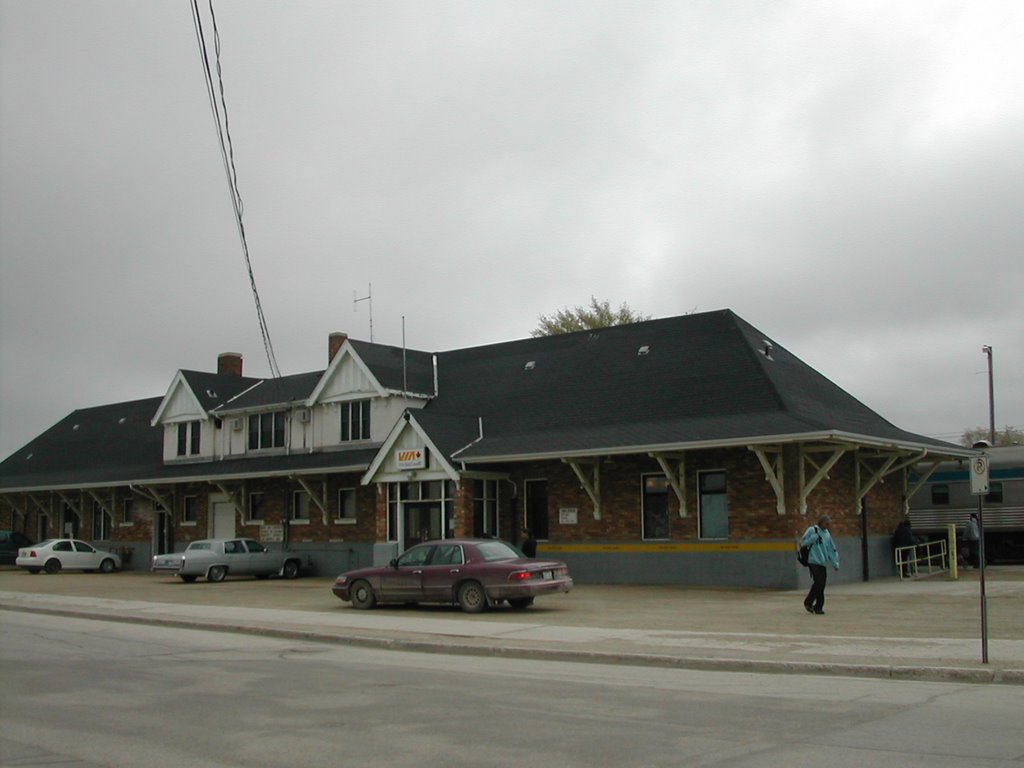 At 10.15 we arrive at The Pas, the first major stop for train 693. The engineers up front change, the train is refuelled and the water tanks are filled up. A couple of people get off, including the only other sleeper passenger, and a few get on into coach.
I walk the length of the train (which doesn't take long) and talk with the station worker who is filling our water tanks. He's having a quiet day it seems, normally there are lots of chatty visitors stepping off the train and asking him questions about the train. He recalls when it was seventeen cars long. Even in the high tourist season, it seems it's never made up of more than three coaches and four sleepers.
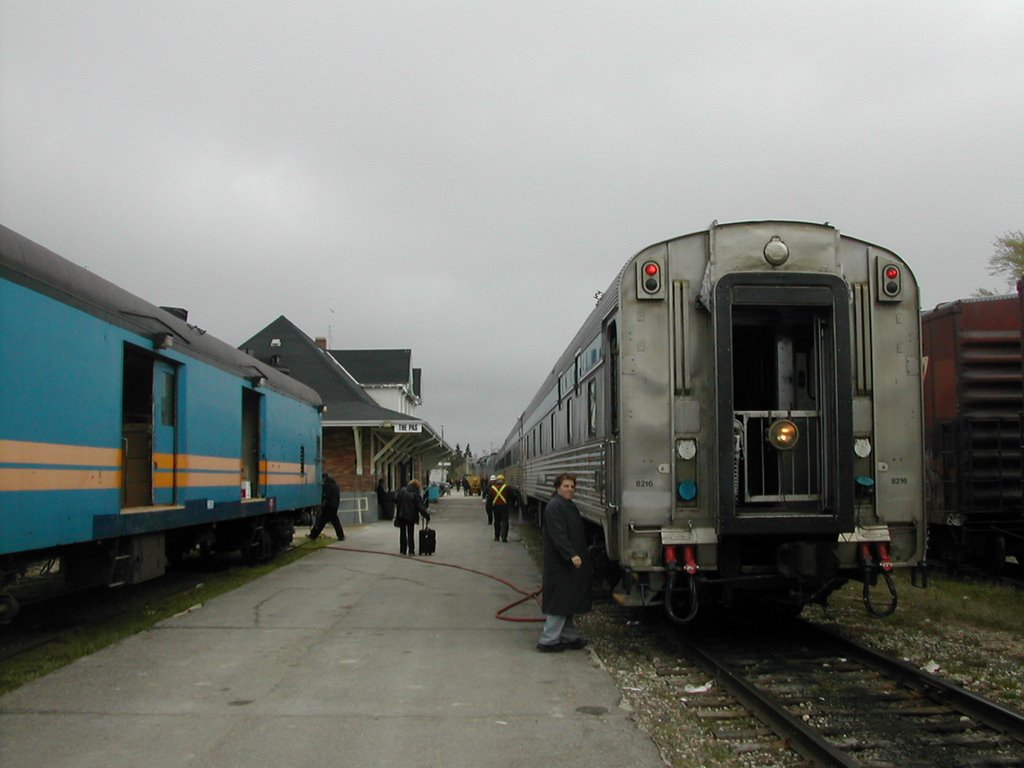 The original station building is still used, although since it handles substantially fewer passengers for fewer trains than it once did, it's a rather shabby shadow of it's former self. To the southern end of the station, parked on a side track opposite our train, are three blue and yellow VIA coaches. These are old cars, built by the Canadian Pacific Railway and subsequently used by VIA all over Canada. I'd never seen one before, though, and I have to ask what they are. I look back into my timetable and discover that they must form the twice weekly connecting train to Pukatawagan. A VIA employee (who will remain nameless) advised me against considering taking this train, which used to run as far as the town of Lynn Lake. I ask why.
"Not safe."
"Dangerous train or dangerous place?"
"Dangerous train. There have been stabbings, and there are always fights on that train. And they don't like whites."
I had imagined that my train was the closest I would get to a working Canadian train that was princiapally used by those whose communities it passed through. But watching (the mostly native) people loading luggage and goods onto the freight car of the Pukatawagan train for it's departure later that day, I couldn't help feeling distant once more. Our train was, in comparison, luxurious, and didn't make me feel any less of an outsider. Our train slipped out of the station, and the ancient blue cars of the Pukatawagan train slipped out of view. I was lost in thought as The Pas left us behind.
Train 693: the first morning
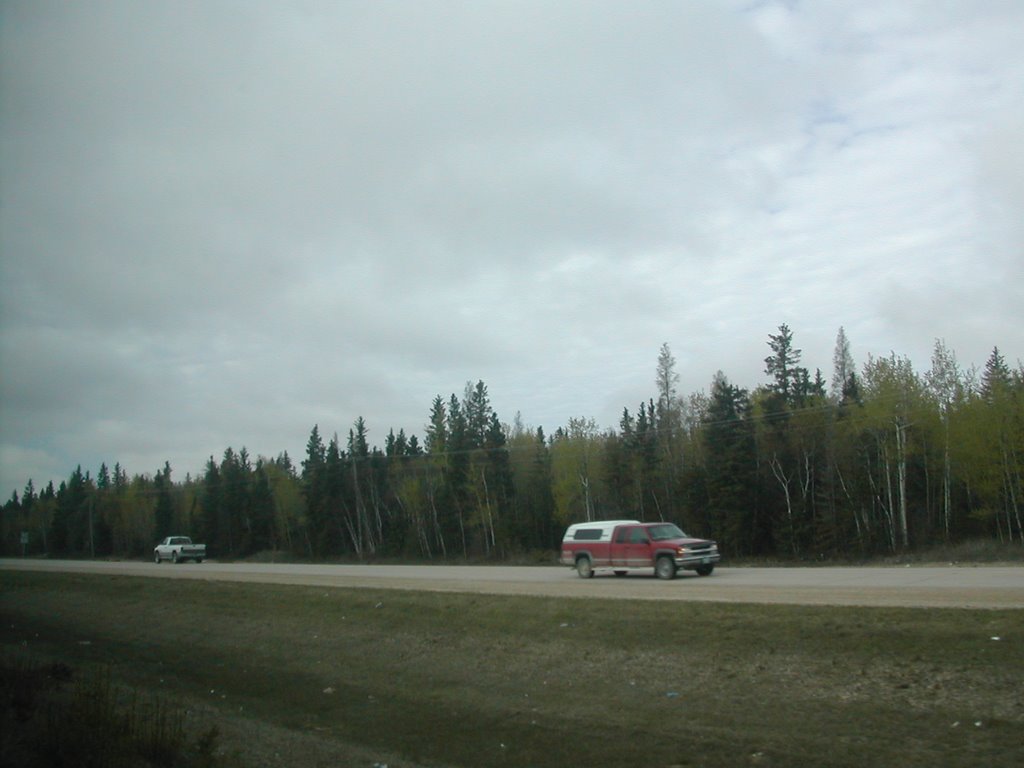 For the first time in two weeks, I am able to sleep on board a train beyond 06.00. In fact, by the time I pop open my curtain and swing my legs down onto the step ladder to my upper berth, it's nearly 08.00. I could definitely get used to this. The mattress was comfortable, the ventilation adequate, and the sleep most rewarding. My dreams were much more balanced than those I have sleeping in coach class.
I dress and walk through to the restaurant car. I'm seated on a table to myself - there's no problem with space on this train - and offered the menu by my Service Manager. The car that I'm in is identical to those used on the mainline 'Canadian' services. According to a VIA employee who I spoke to later, for about five years VIA experimented with a fleet of cars called the Northern Spirit fleet. These had been imported from Florida, but were rejected after a few years because of their hopeless unreliability in the Manitoban winters. The major difference with the mainline service here is visible - no linen tablecloths and only the bare minimum of china. However, the menu reflects the more modest approach, and prices are reasonable: C$6.75 for three blueberry pancakes, which I take with some coffee.
As I start eating, we leave our last stop in Saskatchewan - the little town of Hudson Bay. No doubt named after the final destination of the railway line that passed through, this attractive prairie town now offers plenty of confusion for the uninformed train passenger. We continue on our way, now heading back into Manitoba and towards our first major stop at The Pas (pronounced The Paah). After a few delays during the night, we're about an hour late. A few passengers have also slipped away, leaving the train at small station stops during my deep period of sleep.
I enjoy a refill of my coffee, and look out on a sunny morning.
Train 693: the first night
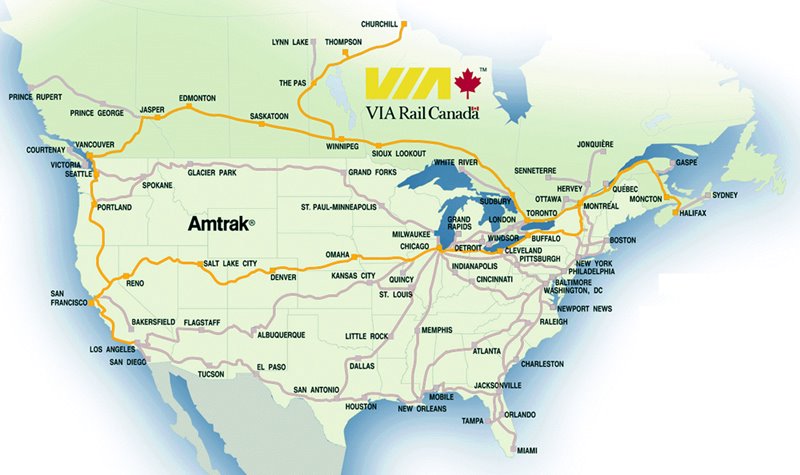
 We're slipping along the tracks to the west of Winnipeg, heading for our first stop in Portage La Prairie. So I'm actually back-tracking now, but we'll soon be heading off the mainline. Although a line as the bird flies from Winnipeg to Churchill would be a neat idea, the trains can barely manage running on the old grain routes as it is. We will actually descibe a gentle arc as we head north, even crossing the border back into Saskatchewan for a few hours tonight before skirting back into Manitoba. Nothing about this train makes sense at first, but then that's what's so appealing.
Our miniscule train reveals that this is the low season. The 'Hudson Bay' does moderately well through the winter with tourists who travel from Winnipeg all the way to Churchill to see the Aurora Borealis (or Northern Lights) and the Polar Bears that can be found in great numbers around the line's northern terminus. In the summer too, there are many who travel north to see whales in the Hudson Bay, or to see the amazing variety of bird life.
But right now, we're in between seasons, in terms of both climate and tourists. Without a major tourist draw, this is a slow time of year. But with the return of warmer weather to the north, this is also a slow time of year on the train. I'm warned that once we pass north of a certain point tomorrow night, our progress will be slowed dramatically as the train crawls along unstable track. This railway line experiences as much as 90 degrees of temperature variation throughout the year, and as a result the trackbed moves a lot with the freezing and thawing of the ground.
I explore the train a bit. It's easy to spot the regulars and the once-in-a-lifetime rail trippers like me. We're the ones with cameras who are constantly checking timetables and peering out of the windows. There are a handful like me in the coach car that has been opened up (the other will remained locked until more room is needed) and I've already heard at least one other English accent (honestly, what is it about British men and trains?)
There's no meal service tonight, but a take out counter in the restaurant car serves drinks and snacks until 23hr (alcohol until 22hr). I have a hot chocolate (C$1.75) and do some notes in my book. I'm alone this evening; the crew of three are on hand at the other end of the car and are already scoring highly in my books for attentiveness. I suspect that being the only sleeper passenger for both the whole ride up and down again leads to personal service.
I head back to the sleeper car, and decide to enjoy the luxury of a shower (denied to all but the most enterprising of coach class passengers). The shower itself is responsive and powerful. The drain beneath my feet appears to drop straight down onto the tracks, although since it's the only source of outside noise into the cubicle, the clickety-clack sounds removed from my shower. I bounce back and forth under the hot water, but enjoy being able to be properly clean after so many nights on and off the train.
After stepping out of the shower, I sense the train slowing to pass through a village. Looking out through the window I make out the small community of Gladstone, Manitoba. We cross deserted streets, passing clanging and flashing barriers that bar empty streets from interupting our progress. The town is sleeping, and I am ready to sleep as well.
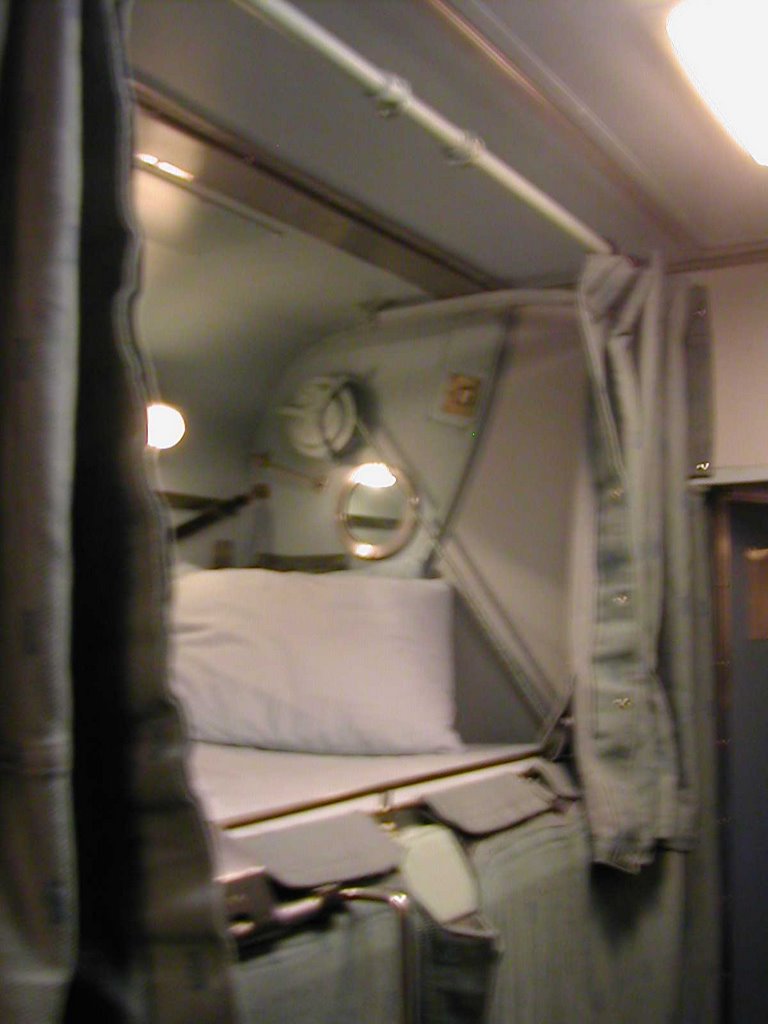
The key to making the sleeping-in-a-berth process easy is preparation. Keeping a soap bag, nightwear and tomorrow's change of clothes handy saves delving around in your luggage. I hurl everything up top, and then climb into my upper berth. There's no window, but the sounds and motions of the train are extremely conducive to slumber. I stow all my bedside accoutrements in the bedside net or the leather pockets by my pillow. There are two reading lights that can be set to two levels of brightness, so once I've buttoned my curtain shut, I'm able to read for a while. As I curl up with an appallingly bad fifties action novel (starring Johnny Fedora, a James Bond lookalike who seems to make up for his alcoholism by being in the right place at the right time) and contemplate that this is a fine way to travel. It's how I imagine Tintin crossed Europe. All I need is a little white dog curled up at my feet, and the image would be complete.
I fall asleep quickly...
Train 693: Boarding
 I'm back in the station with plenty of time to spare. The agent at the ticket counter has looked after my bags, and what's more, there's no charge ($2.50 a bag at Vancouver station...). It's much quieter now that it was when I got off the 'Canadian'. During that extended stop, the station hummed with excited passengers joining the train, and continuing passengers who were allowed to get off the train to explore the station and get some fresh air. There's a beautiful domed entrance hall in Winnipeg station, but the two ticket desks and passenger lounges are all grouped together in the comparatively cramped and low-ceilinged space beneath the tracks.
 20.30hr arrives, and boarding is announced. There are, to be honest, not many people in the lounge. I count maybe half a dozen of us. Unlike the 'Canadian', which is a flagship tourist train, the 'Hudson Bay' is frequently used by locals. Although it's the only form of ground transport to many remote communities north of Thompson, MB, it's also used by passengers going to southern Manitoban towns such as Dauphin and The Pas.
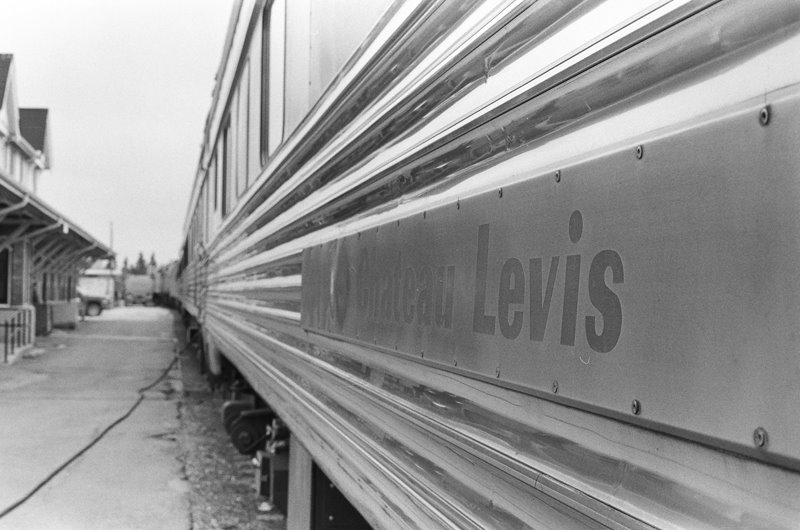
Returning up the escalators I descended earlier, I'm presented with a much more modest sight. Train 693 uses the same carraiges and locomotives as the 'Canadian', but without the elegant dome cars and without the half mile long consist. In fact, our train has just five cars behind two locomotives. There's a baggage car, two coaches, a restaurant ('Annapollis') and a sleeper ('Chateau Levis').
And for a change, I'm heading to the sleeper.
The CanRailPass and North America Rail Pass will give the ticket holder a seat in coach class, and nothing more. If, however, at any stage of a rail pass trip, you feel like a bit more luxury, you can pay the basic accomodation fare and upgrade to a sleepr. In my research I found this train to be significantly cheaper than the Canadian for such an upgrade. Although (unlike the Canadian) food isn't included in the sleeper fare, the cost of an upper berth going northbound and a lower berth returning came to C$247.17 - and that covers four night's accomodation on board the train. I'd heard prices for a single night in similar accomodation on board the Canadian in the region of C$160, so this was a real bargain.
I'm met on the platform by Carmel, the train's service manager, and Tara, the train's chef. Since there's only one sleeper on the train today, and only two passengers in it, she's doubling up as the attendant for this car. She shows a lady passenger the way to her single occupation 'roomette', and then leads me to the other end of the car to my berth (sometimes referred to as a section).
 This plan varies slightly from my car, but it gives you an idea. The only other passenger in the car was in one of the purple shaded roomettes. The green shaded bedrooms were unsold, and being used for the crew. The remaining six berths were all for me. I'd booked a cheaper upper berth going north and then a more expensive lower berth going south in order to compare them.
When not converted into beds, these sections appear to be three pairs of wide facing banquette seats. In about five minutes, they can be converted into beds. The seats collapse to form a horizontal surface. A key unlocks the upper bunk, which folds down, and curtains and curtain rails fold out. A nattress for the lower bunk is stored in the upper bunk, and it's brought down to make for a more comfortable bed than just two folded seats. With fresh linen, a duvet and two fluffy pillows each, you have some very cosy accomodations.
With no other passengers for this part of the journey, the process of conversion doesn't have to get in my way: my bed has already been made up and I'm free to sit in the two unconverted pairs of seats. Tara explains everything to me, and gives me a shower amenity kit. Just across the hall from my berth is a shower room, which I look forward to sampling later. Towels, soaps etc are all included. She continues by explaining that, in her opinion, I've made the wisest choice with the berth: the mattress is wider than any of the other accomodations, and she's always slept well in them.
We pull out a few minutes ahead of schedule, and I settle down for a very interesting ride.
Subscribe to:
Posts (Atom)