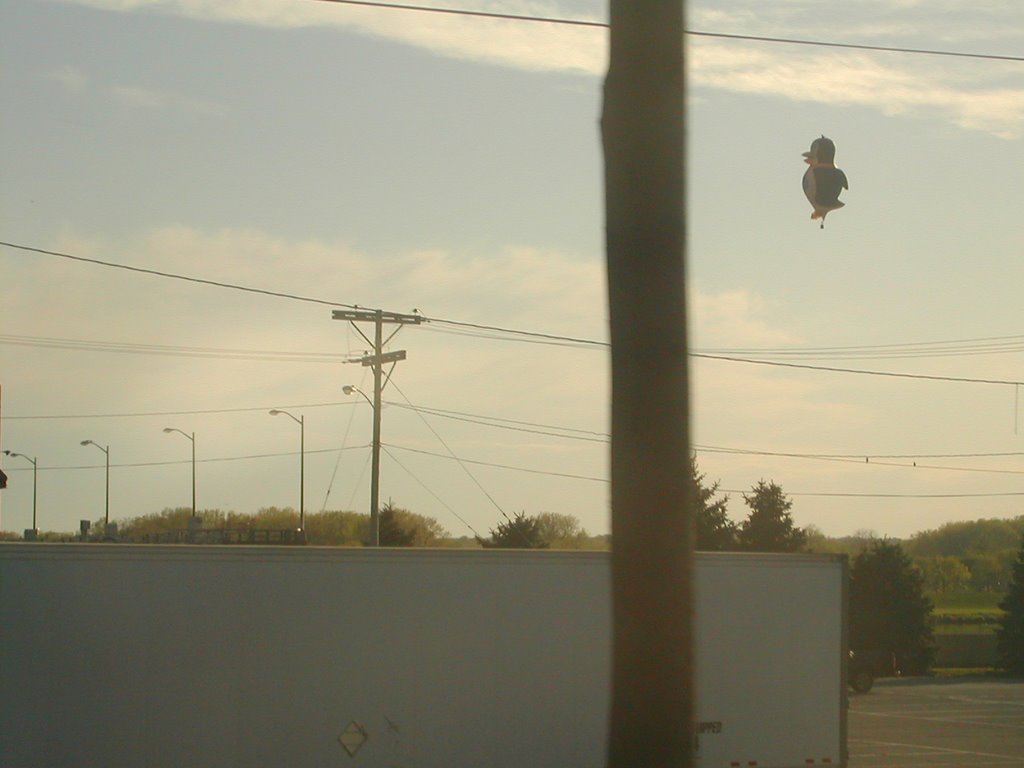
Does the United States Post Office really save money by making their own vans from flat packs? I mean, Ford and GM both make good vans, I'm sure they could get a good deal...
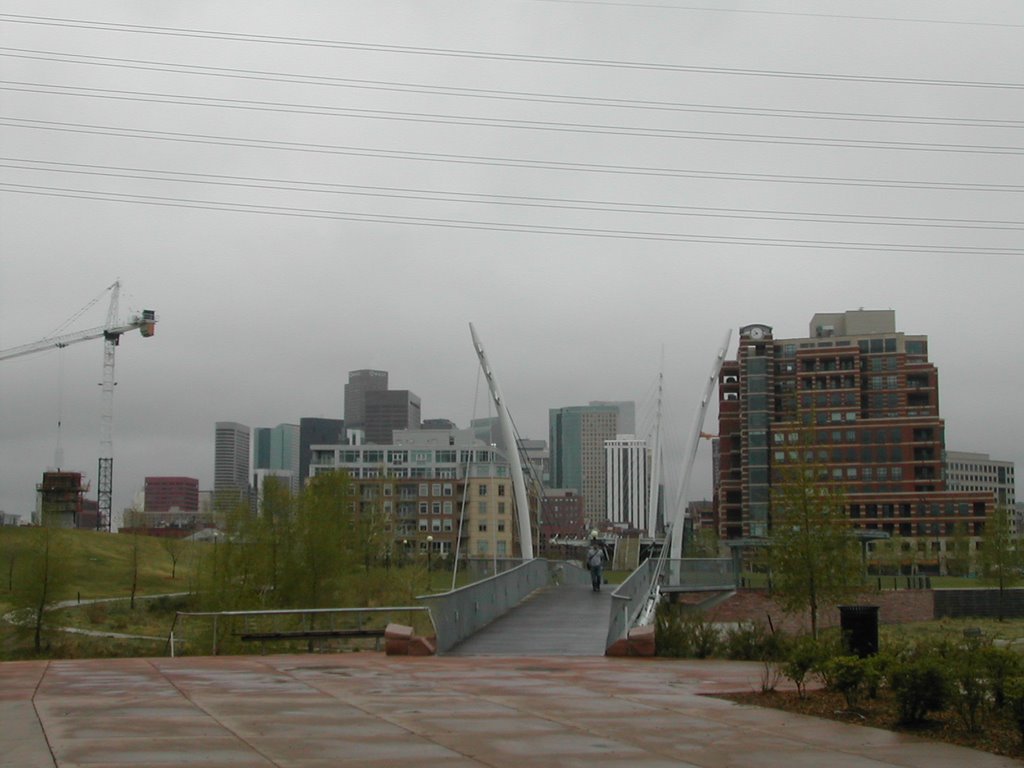 To all the denizens of Denver ('Deniverizens'?) I must apologise. I didn't chose to visit your beautiful city for any particular outstanding reason; the Mile High City (so named because of it's altitude above sea level on a plateau that leads up to the Rocky Mountains) presented itself to me as an interesting point for a stopover because it came at a convenient mid-point in my trip. Rather than do fifty to fifty-five straight hours on the train from Chicago to San Francisco, I decided to take a break in a city I'd heard a bit about and which sounded to offer enough distractions for a day or so.
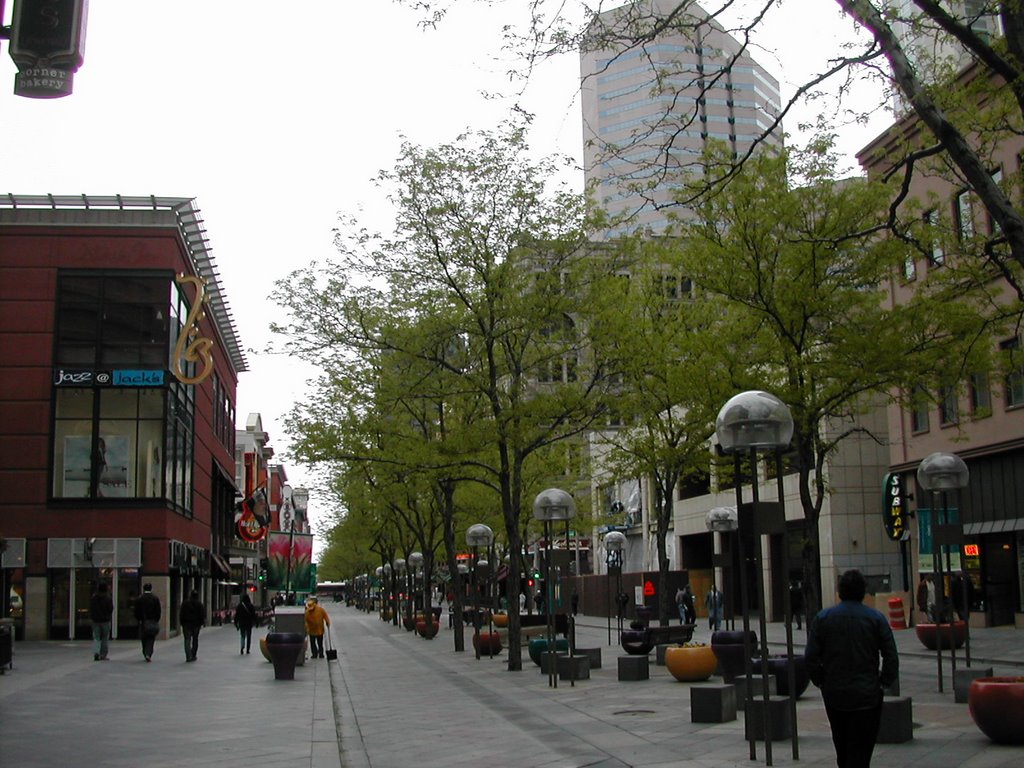 Denver is a city that has put all it's weight into making it's city centre easy for tourists and visitors to navigate. The city is no longer limited to just being a good base for the mountains, and a lot of money has been spent on Sixteenth Street Mall (shown here), the main shopping drag that runs from near to Union Station down to the Capitol Building. In fact, it's a good place to spend a day off the train, because everything is walkable from the station, and the downtown area is easy to explore. The mall has been re-designed to make more room for pedestrians, and whirring hybrid-electric buses swoosh up and down offering a free shuttle for the length of the mall.
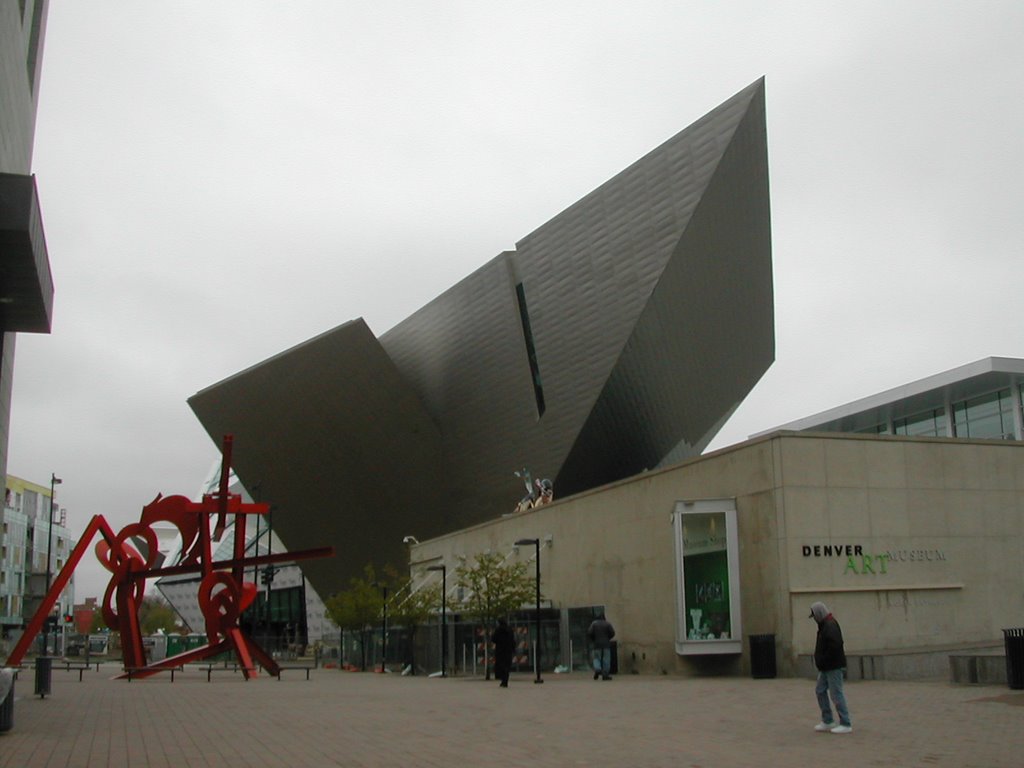 Although I am already regreting coming here on the one day of the week when Denver's museum workers all have a day off (perhaps they go bowling or do some other fun group activity together?) there is a small silver lining to the grey clouds. The Denver Art Museum is in the midst of a major extension project, so even if I had been able to get in, I would have been annoyed at being here too early to see the new wing. Here's a photograph. Being a young upstart of an architect I won't bore you too much with my opinion, but it saddens me to see that another city has been seduced by the arrogrant self refenetial architectural b------t of Studio Daniel Liebskind. I bet the words 'landmark building' were used when they won the competition to design this extremely expensive and impractical lump. Just a shame he's doing something virtually identical in Toronto. In fact, the Denver Art Museum has decided to emphasise it's modernity by shortening it's name to DAM in much of it's puclicity. Even that reminds me of Toronto's ROM (Royal Ontario Museum). Could any world class architects please step up to the plate and try designing a landmark building that reflects the location in which it's built? Please...?
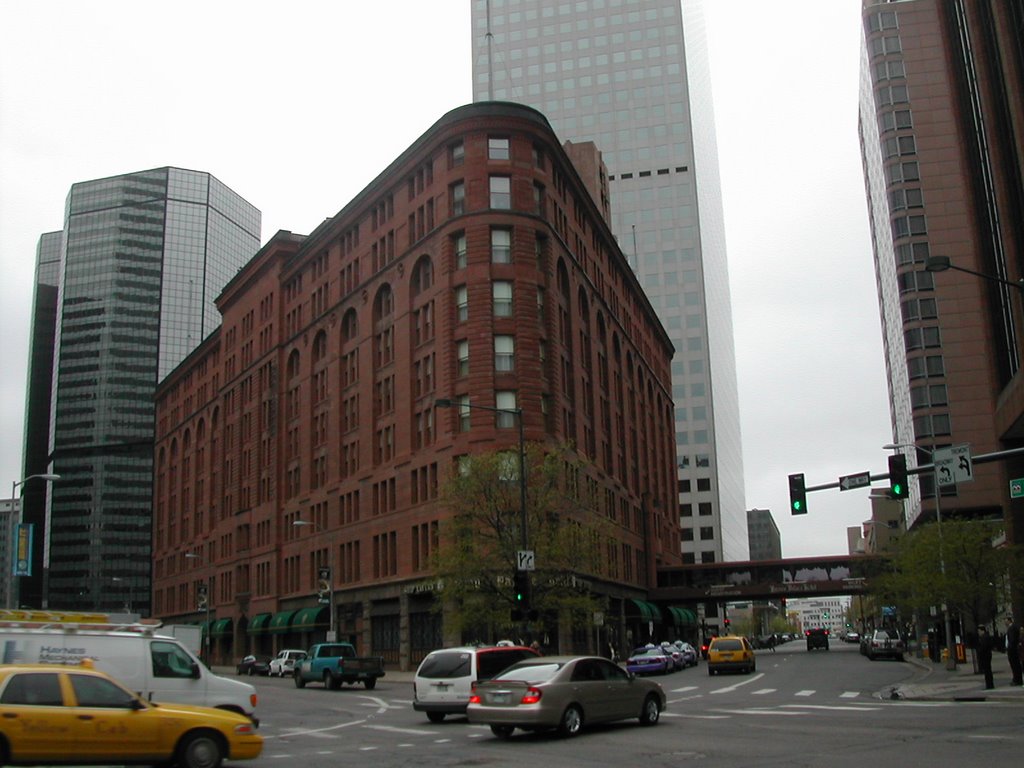 I spend the afternoon exploring the city centre, peering inside the gorgeous old Brown Palace Hotel, which proudly occupies a corner plot in the downtown core. If you're visiting, and even if you're not staying there, walk inside and look up from the lobby the middle of the building. Every floor opens into the atrium with an open balcony, and it's a gorgeous space that recalls the grandeur it would have impressed on guests when it first opened one hundred and thirteen years ago.
 I wake up before 06:00. When I was on my last train, the crew and at least one other passenger said that this (my next) train would be much more comfortable. But in the same way that I found the atmosphere on board the California Zephyr underwhelming, I must also admit that I slept much more comfortably on the Lake Shore Limited. I don't know why, but this morning all my initially happy impressions of sleeping coach class have vanished, and I stumbled to the cafe car in search of caffeine while nursing a variety stiff and aching muscles. I will have to purloin more Amtrak pillows to cushion my various boney bits for my next night on the train.
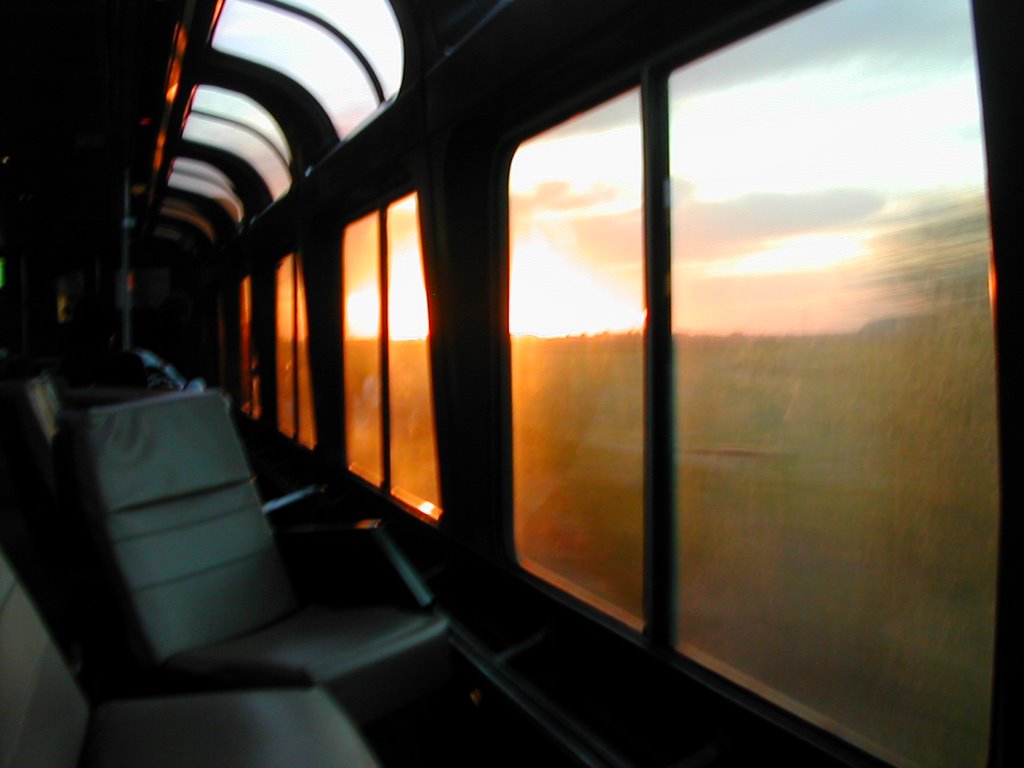 If I can confess something between you (dear readers) and I (pooped James), but I must admit to being a bit disappointed with the atmosphere on train 5. On an evening sojourn to the cafe below the Sightseer car, the attendant admits that it's a very 'light load' today. We're between the first holiday weekends of the season and the next big jump in traffic as the summer begins. I had hoped, by now, to have been acosted by numerous holiday makers, backpackers and elegant single female travellers with lots of money. Better luck next time, I guess.
Named after a Native American tribe when this was a trading post on banks above the Des Moines River. Ottumwa subsequently became a business centre and the 'home town' to MASH's Radar O'Reilly.
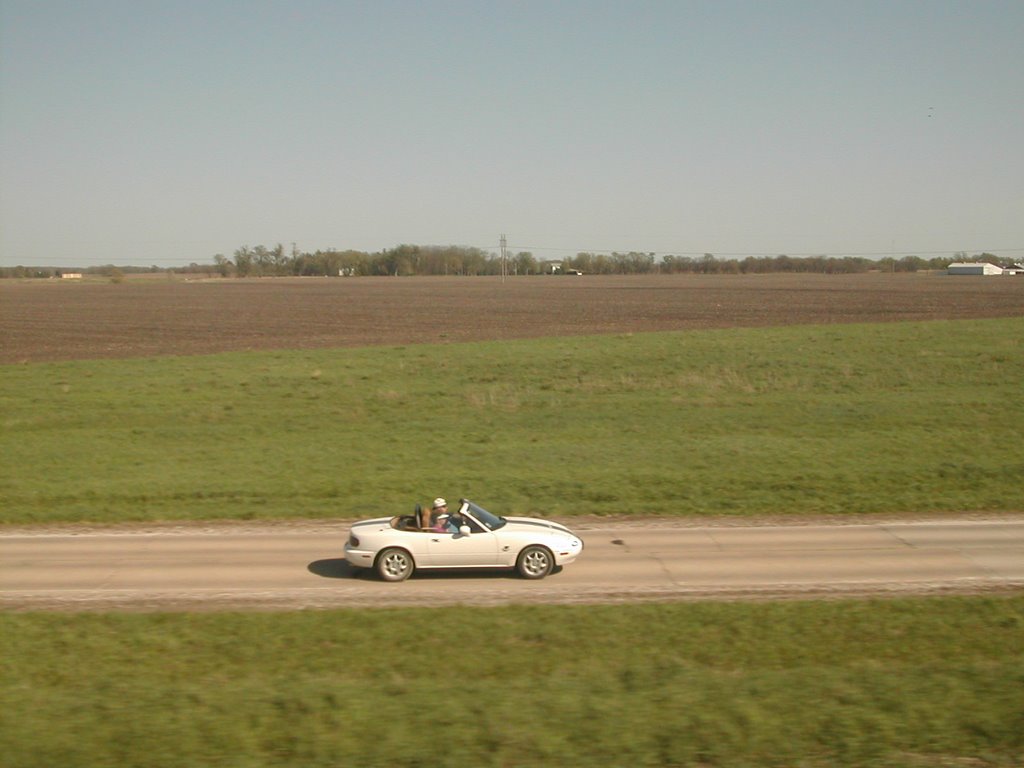
 After we have travelled an hour or two out of Chicago, the train has begun to settle into its rhythm. Passengers are stretching out, reading, dozing, watching movies on portable computers or reading books. We're barreling across the agricultural flatlands of rural Illinois, much the same as the parts of Ohio and Indiana that I passed through on Saturday morning. The sun is shining, and from my comfy chair in the Sightseering Lounge, the mid-west is looking gorgeous. For me, this landscape is still unearthly. Everything is different. Even though I've lived in North America for over six months, I'm still a little islander by heart. Save for the Fens of Cambridgeshire and Norfolk, there is nowhere back home that is as flat and vast as these agricultural belts of North America.
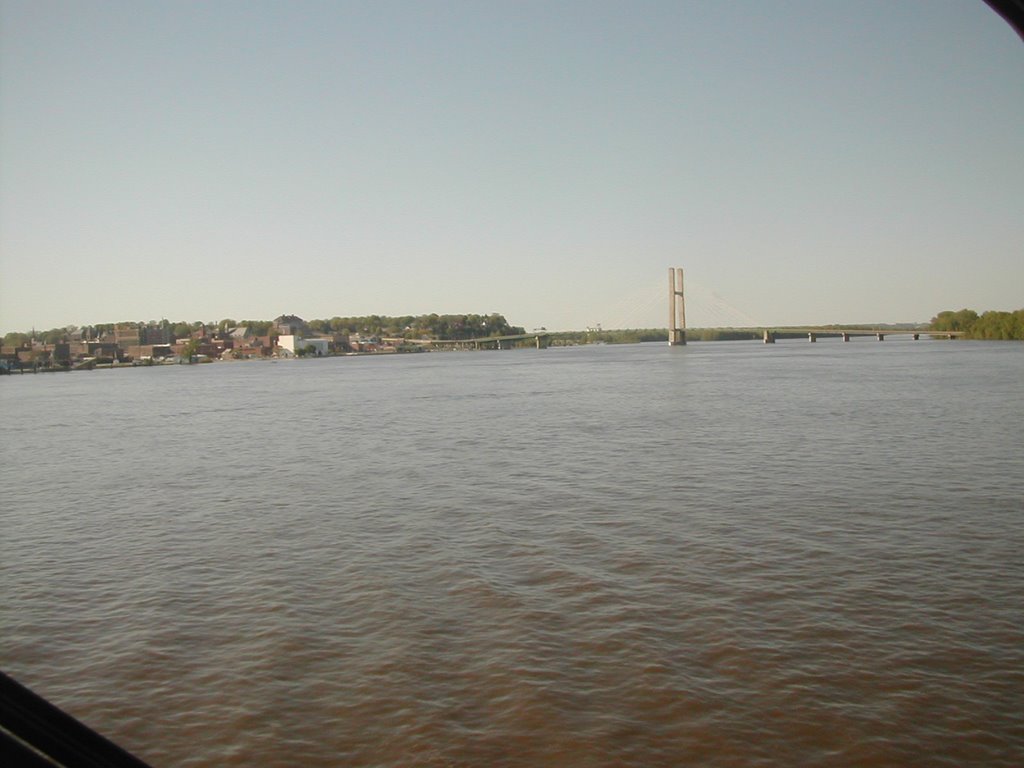 The further west we go, the greener it gets. In the last twenty minutes or so before we cross the Mississippi, the fields thin out and the greenery suddenly gets denser. We're rolling through leafy forests, with fresh leaves sprouting on all the trees, breaking the bright sunshine that is falling through to the moist forest floor. Still bodies of water start to appear, and then almost without warning, the train slows and we rumble onto the 600 metre bridge that carries us across the Mississippi. At 3780km, I have to admit that this is one of the longest rivers I can said to have crossed at ground level. Although it's not as long as my trip will be...
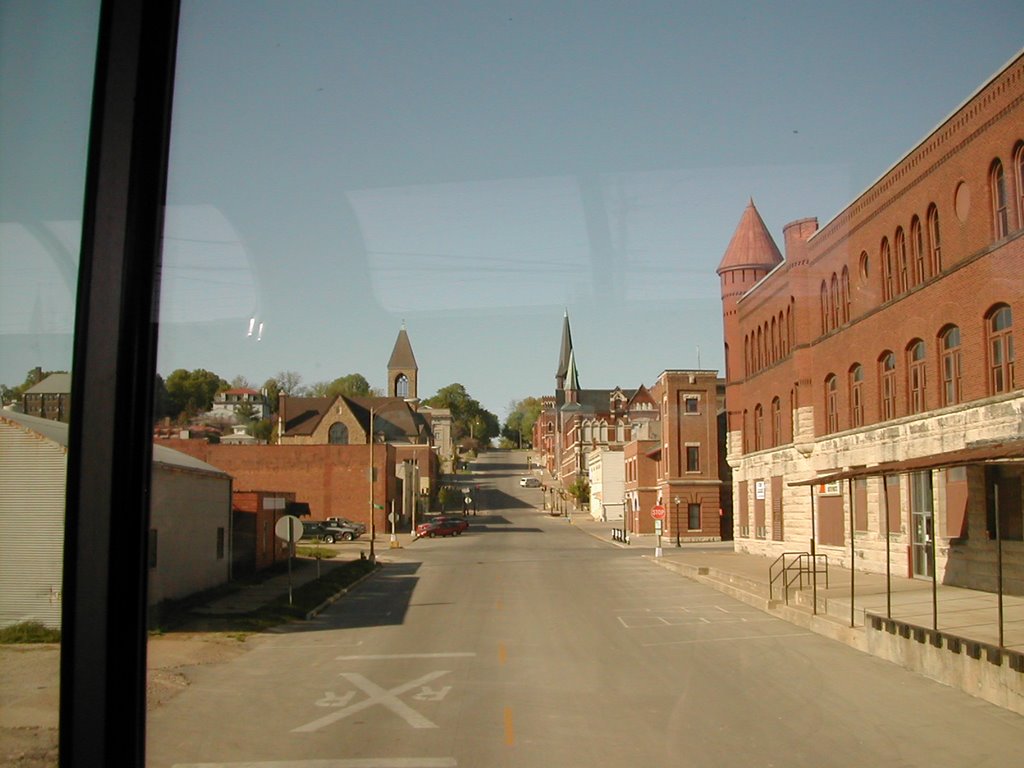 It's sunny in Burlington, IA, but the once grand turn of the century five and six story industrial buildings in the town's small centre all appear vacant. Of the few shop units I see, several have 'For Lease' signs in their windows. Small town America is hurting bad: America is so used to the automobile that small centres of population simply can't rely on local business any more. Might as well hop in the car and drive 50km to a cheaper big box store. As we cross what looks like Burlington's Main Street, not one car waits either side of the level crossing for us.
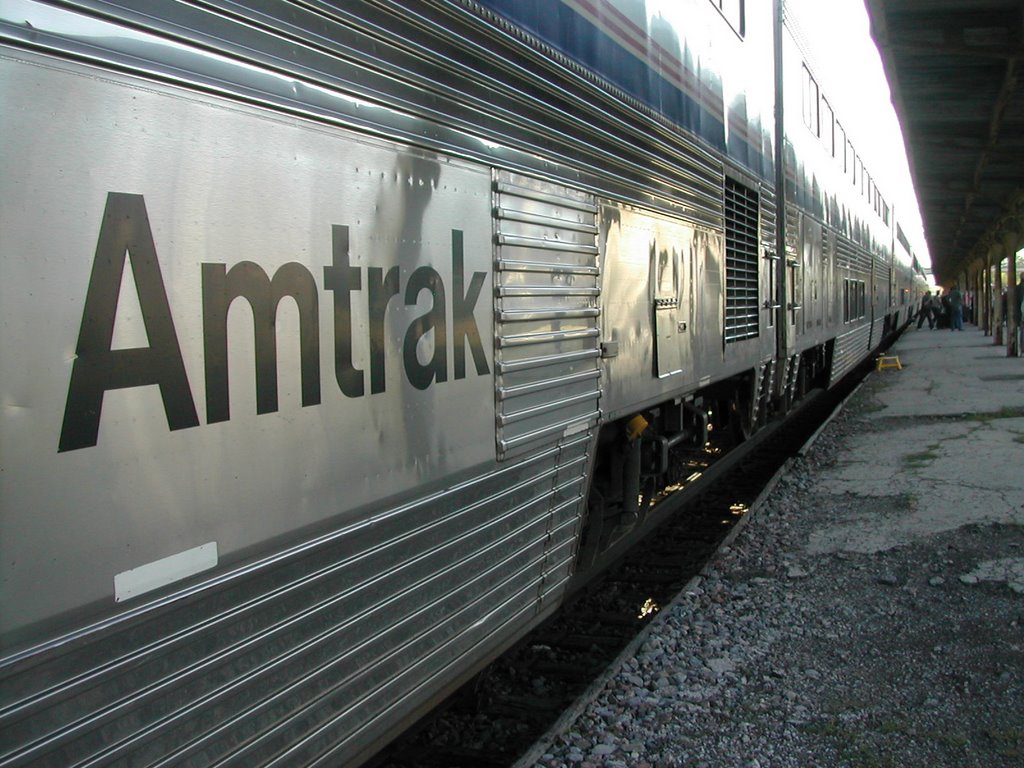
Manufactured by the Pullman-Standard Company for Amtrak between 1979 and 1981, these spacious, twin-decked coaches operate on all long-distance routes west of the Mississippi as well as on some in the east. Designed to be 'the finest trains anywhere in the world', the have air-cushioned suspension and were built with extra sound-absorbing materials. Each Superliner car measures 85ft (26m) long and 16ft (5m) high, weighs 75 US tons (68 tonnes) and has large windows with excellent views, especially from the upper level. The reclining seats, about equivalent to flying First Class, provide leg and foot restsm folding trays and personal reading lights ... Dining cars cater for up to 72 people and are on the upper level above the kitchen. Sightseer lounge cars and most kinds of sleeping accommodation are also usually available. Rest-rooms (toilets) are mostly on the lower level, with at least one accessible to disabled passengers...
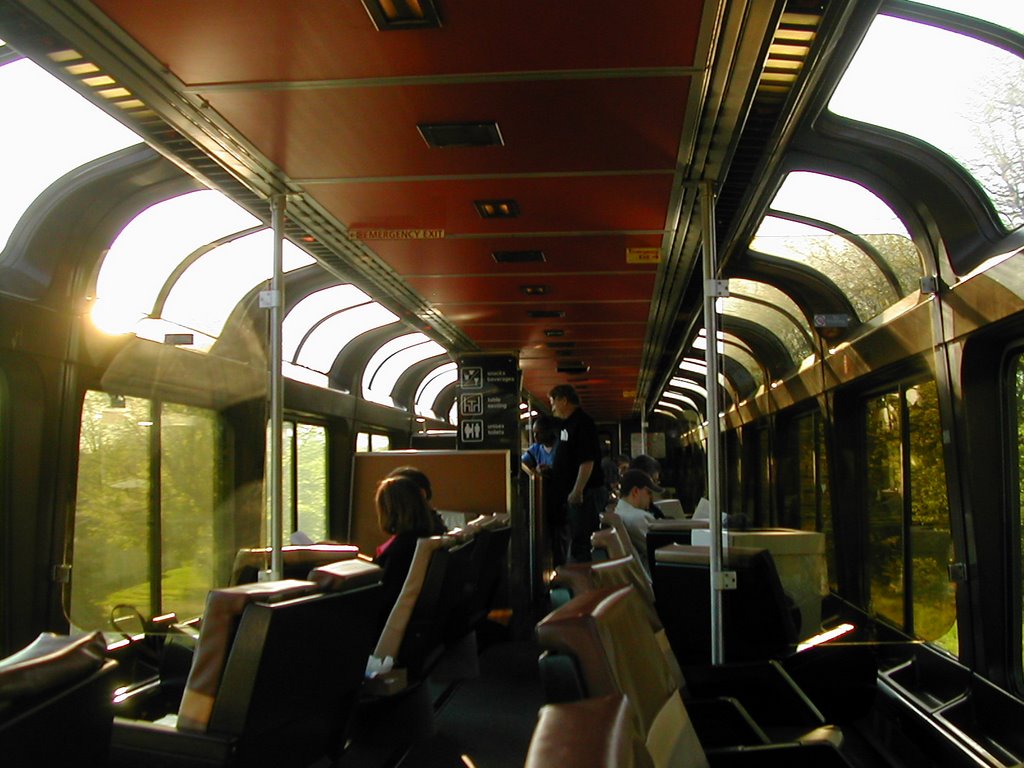 The Sightseer lounge is the most famous part of a Superliner train. The top deck is opened up with extra deep windows, and small curved roof lights that flood the car with natural light, and a satisfying view of the tops of trees as we thunder through forests and along cuttings. Leatherette swivel seats and combined foot rests and pockets under the windows make for a very comfortable viewing car, and I happily spend an hour or two here as we head towards the Mississippi River, and the boundary between the states of Illinois and Iowa. My only complaint is the colour scheme of these largely unrefurbished cars. Brown may have been a hip and trendy colour in 1981, but that doesn't justify keeping so much of it in the lounger car. If you go down the narrow steps in the middle of the car, you'll find a small cafe with tables for snacks and drinks... good for postcard writing and meeting fellow coach class passengers.
 At Galesburg, Illinois, I step outside into the sultry afternoon heat, and take a photograph or two. There is no longer any smoking accomodation on board this train, and it's soon easy to spot the regular crowd of addicts who beg the conductors to reveal when the next smoking stop will be. At each stop where we have a few minutes to let the train rest and make satisfying creaking sounds as hot metal cools, a little smokey crowd gathers close to the doors. I take a deep breath of rural Illinois air, and hop back on board, and we rumble onwards.
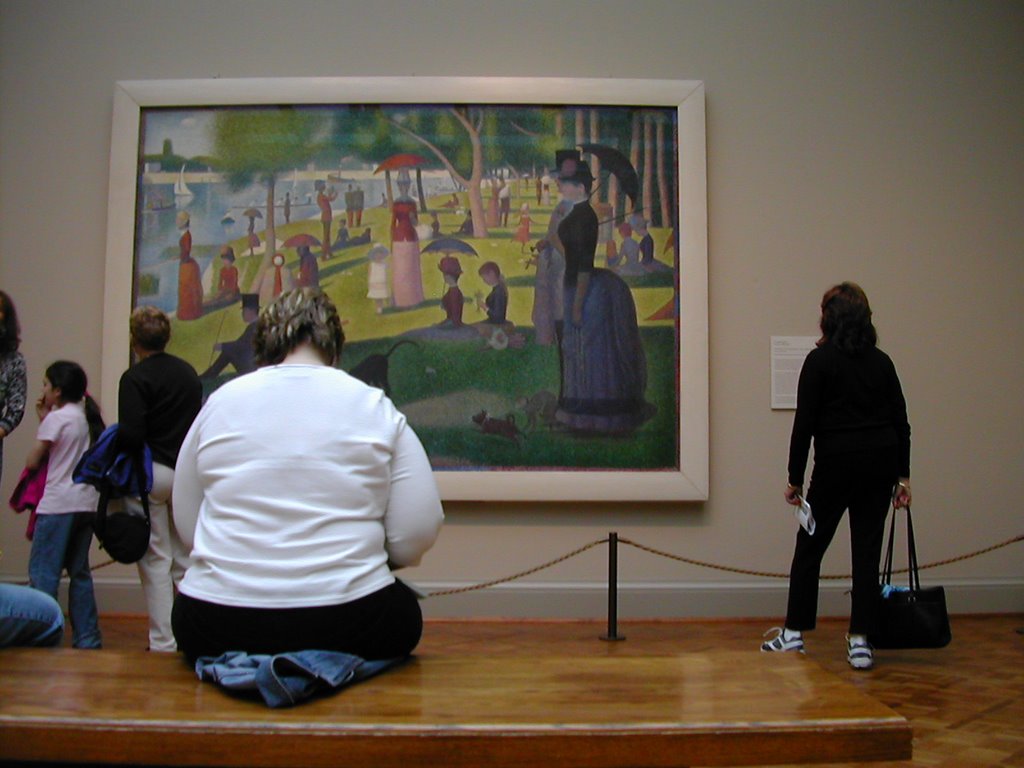
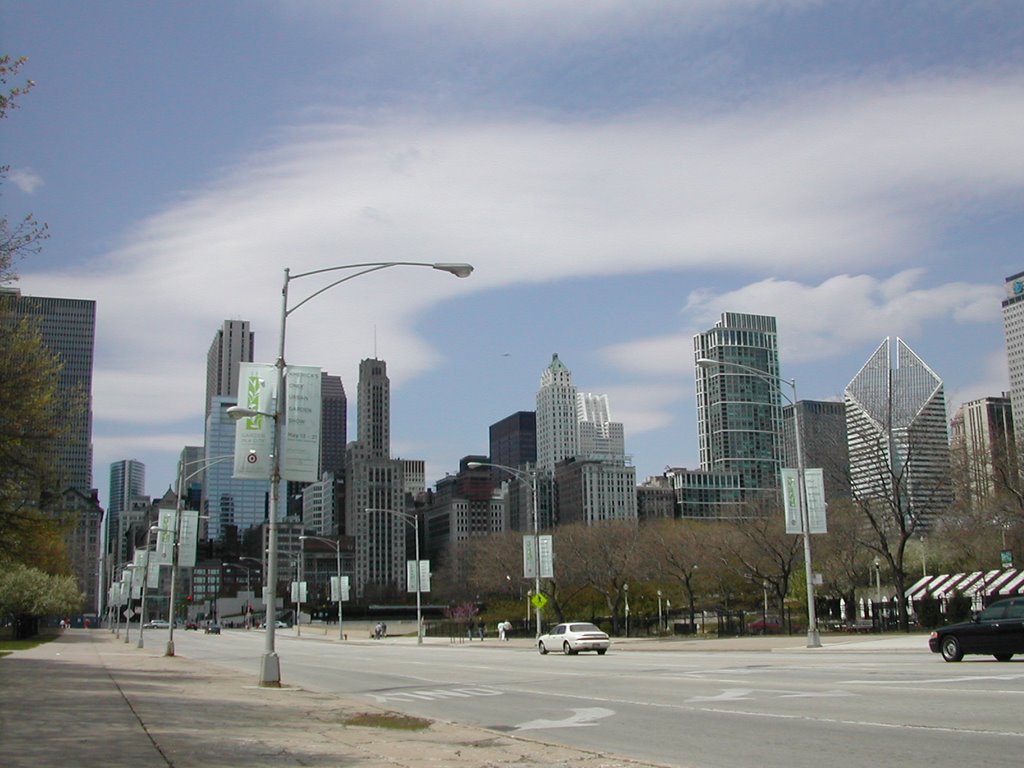 I collected my bags from the cloakroom of the Chicago Art Institute, and headed towards the station. I didn't have enough credit left on my transit card, so took the healthy but muscle-aching route by foot.
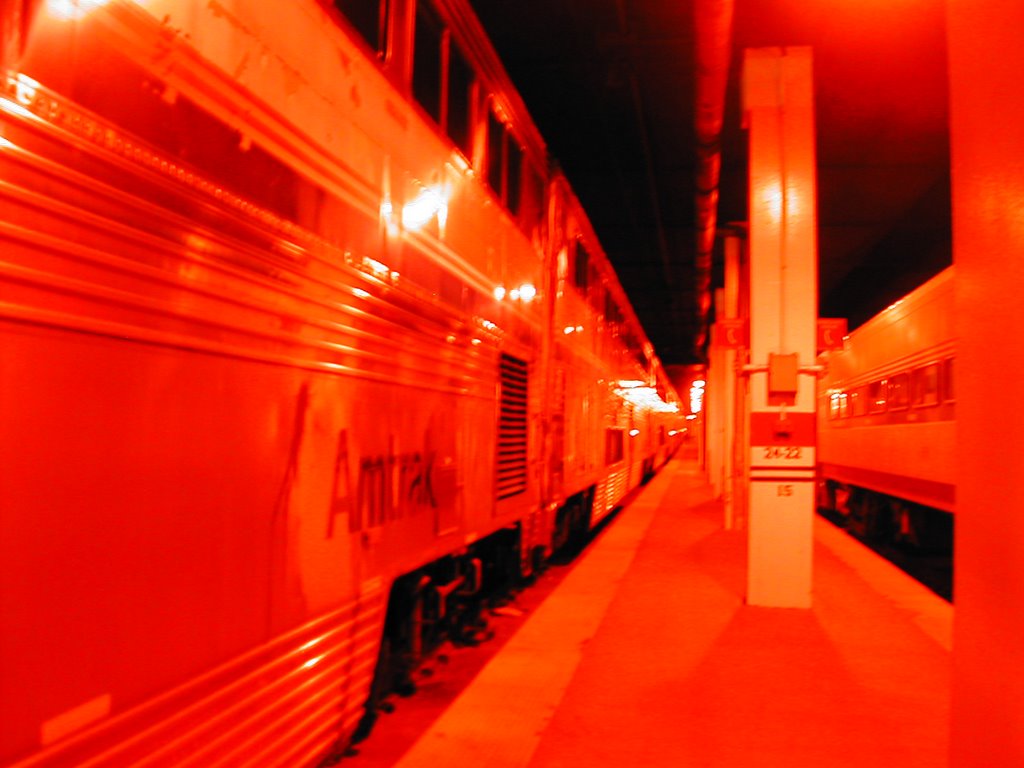 Whereas most trains in the east of the USA are operated by single level cars, all the long distance routes in the west are run using huge Superliner double deck cars. If you've never seen one, they certainly impress you as serious pieces of kit. Like other Amtrak stock, their exterior is shiny steel. You board in the centre of the car, through a door that is very close to track level. To your right are some toilets and changing rooms. On the left is a small area of lower level seating, sold at a slight premium to the upper level. A narrow staircase is also here, opposite a large luggage area. If you climb the stairs, you arrive on the main level of the car - the whole length of which is coach seating. As with all North American trains, the crew will turn all the chairs in the car to face the direction of travel: quite why this is I'm not sure, I personally prefer the perceived safety of sitting facing backwards. Maybe that would just be too European...